Organizational Development

Space for change that takes root.

Cultural change, transitions or a new strategic direction can’t be handled like a project. I support change of this kind and keep both the people and the structures in view.

Change as a Venture

When change gets complex.
An initiative cuts deep. Many people bring different perspectives to the table, and the decisions have far-reaching consequences. That’s when it becomes clear: this cannot simply be decided and rolled out.
Everyone agrees that something has to change. What that future should look like is still open. At the same time, things need to move forward. Results are expected, and day-to-day business carries on.
That’s when change needs more than a plan.
Change can be a lot to ask of people. It needs a space where direction can emerge, conflicts get resolved, and decisions are made together.

My role

No solution from the outside.
Unlike traditional management consulting, I don’t bring ready-made answers. I trust that the most effective solutions emerge from within the organization itself, with the people who know it best.
I hold the space, structure conversations and look at what is going on in the system with the right mix of closeness and distance, including where others tend to look away. I notice where an organisation is caught up in its own history. I point out contradictions between what people say and what they actually do.
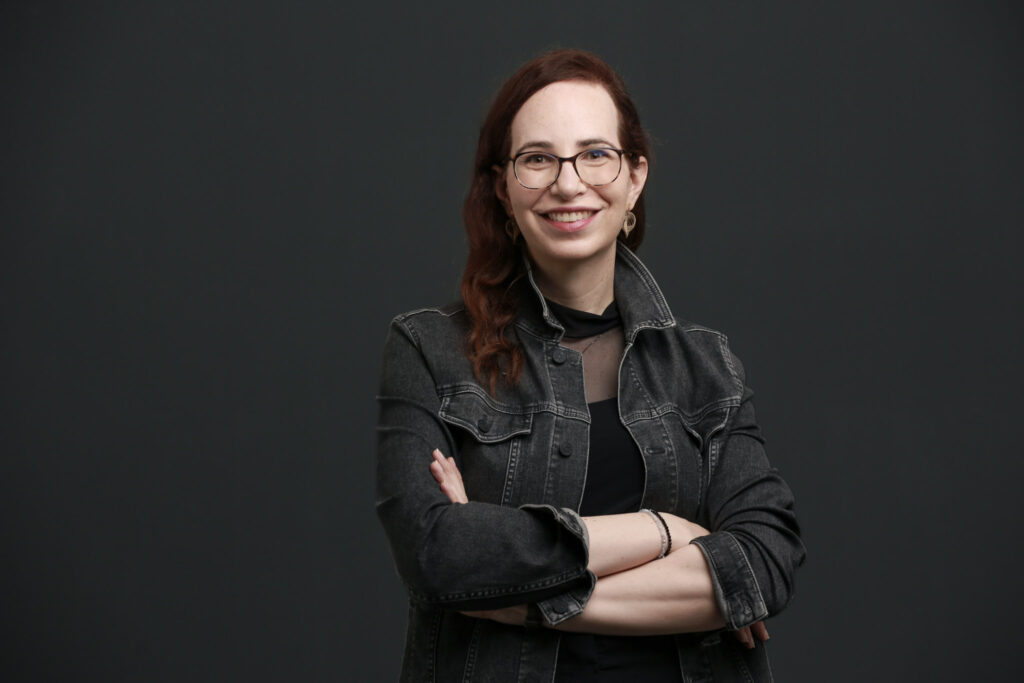
Lea Dingel, systemische Coach, Team- und Organisationsentwicklerin, Berlin

What guides me

Good guidance requires judgement.
There is no single process that works for every organization. What makes sense becomes clear as the process unfolds. These principles help guide my work.

Understand first, then change.

Before changing something, I want to understand what the existing structures are doing. Routines, structures and habits are not simply inertia. They provide orientation and a sense of security. Not all of them need to stay. But before something is let go, it should be clear what function it has served.

Behaviour is shaped by context.

When people withdraw, hold on or push back, I don’t first look at their attitude or motivation. I am interested in the structures, experiences and expectations that give rise to or reinforce that behaviour.

Resistance is information.

Objections, irritation and conflict are not simply disruptions. They often show where something has not yet been understood, clarified or taken into account, and what traces previous changes have left behind.

Participation does not replace responsibility.

Relevant perspectives and the knowledge within the organization belong in the process. That does not mean everyone has to agree in the end. There needs to be clarity about who decides, whose interests are affected and who takes responsibility for the consequences.

Plan, without clinging to the plan.

A good structure provides orientation. At the same time, there needs to be enough openness to respond to what only becomes visible along the way.

In the end, everyday practice is what counts.

Change is not complete when a decision has been made or a workshop has ended. It needs to show up in how people work together, how decisions are made and in the routines of everyday work.

Possible Formats

Many ways to work together.
Sometimes the situation calls for a longer development process, sometimes it is about supporting a transition or working with a leadership team. Often, several formats work together. We’ll clarify what makes sense for your situation in an initial conversation.

Systemic Consulting

I support longer development processes and look with you at how structures and dynamics interact.

Change Facilitation

For transitions such as a generational handover or a new strategic direction. Together we plan who gets involved when and what should stay stable.

Executive Coaching

For leaders and teams who are responsible for a change and need room to think. Especially when they’re expected to provide a clarity they’re still looking for themselves.

Culture & Values Work

We look at the unwritten rules in your organization and which ones you want to change. They often say more about your culture than any mission statement.

Training & Keynotes

Expert input for leaders and change managers, from a single talk to a multi-day training programme.

Ready for the first step?

Maybe you already sense that something needs to change. Write me a few lines about what’s on your mind. Two or three sentences are enough. I’ll get back to you personally and we’ll arrange a short, free introductory call. In that conversation, we’ll look at where you stand, what your system needs and whether we’re a good fit.
Request a free introductory call

Frequently Asked Questions

What you want to know beforehand.

Every organization is different. That’s why I don’t follow a fixed plan. The process emerges from what becomes visible and what the system needs. Usually, there are three phases: taking stock, choosing direction and finding solutions, and then implementing them. What matters to me is that change becomes tangible early on – that’s how we quickly see what truly holds your organization together.

It depends on your goals. Sometimes it’s just a few workshops, sometimes a longer collaboration over several months. What counts is not the duration, but that your organization itself comes into movement – sustainably, not hastily.

I don’t bring ready-made solutions. My focus is on helping you as an organization find your own answers – ones that fit your culture, your people, your reality. I hold the space and accompany the process until clarity and alignment emerge.

Depending on the topic, I work either on my own or together with colleagues from my network. For larger projects, I bring in suitable partners – people who are a good fit both professionally and personally for the task at hand.

I work with large corporations as well as start-ups, associations, and non-profit initiatives. What matters is not size or industry, but the willingness to meet honestly, take responsibility, and move things forward together. Where people collaborate and want to make a difference, I support the process.

Then we stay with it. I don’t see conflicts or resistance as disruptions, but as entry points to what really matters.

As a trained mediator, I guide such processes with structure and sensitivity – without smoothing over what needs friction. I hold the space, facilitate, and help clarity and trust re-emerge.

Change shows itself on multiple levels – in attitudes, behaviors, and outcomes. Often, progress becomes tangible before it can be precisely measured: through better communication, clearer decisions, and a stronger sense of shared responsibility.

At the start of each project, we define together what maturity levels and observation points make sense – qualitative as well as quantitative. That way, development stays visible without being forced into narrow metrics.